
Buying Guides · Pet Supplies
How to Fit a Dog Harness for Everyday Neighborhood Walks
Measure your dog, compare front and back leash clips, and check harness fit on a neighborhood walking route.
Published
THE CLEAR TAKEAWAY
Quick Answer
Start with a harness whose chest measurement matches your dog and whose straps can be adjusted for its shape. Choose the leash attachment based on how you actually walk together, then confirm the fit in motion.
Research Method / Evidence Basis
Public-source research. We reviewed the linked manufacturer documentation or official guidance and used it to explain practical buying decisions. We did not conduct hands-on product testing for this guide.
Editorial responsibility: One Clear Pick · How we research and recommend
This article contains ordinary source/manufacturer links, with no affiliate purchase links. How commissions work.
Measure for the dog you have
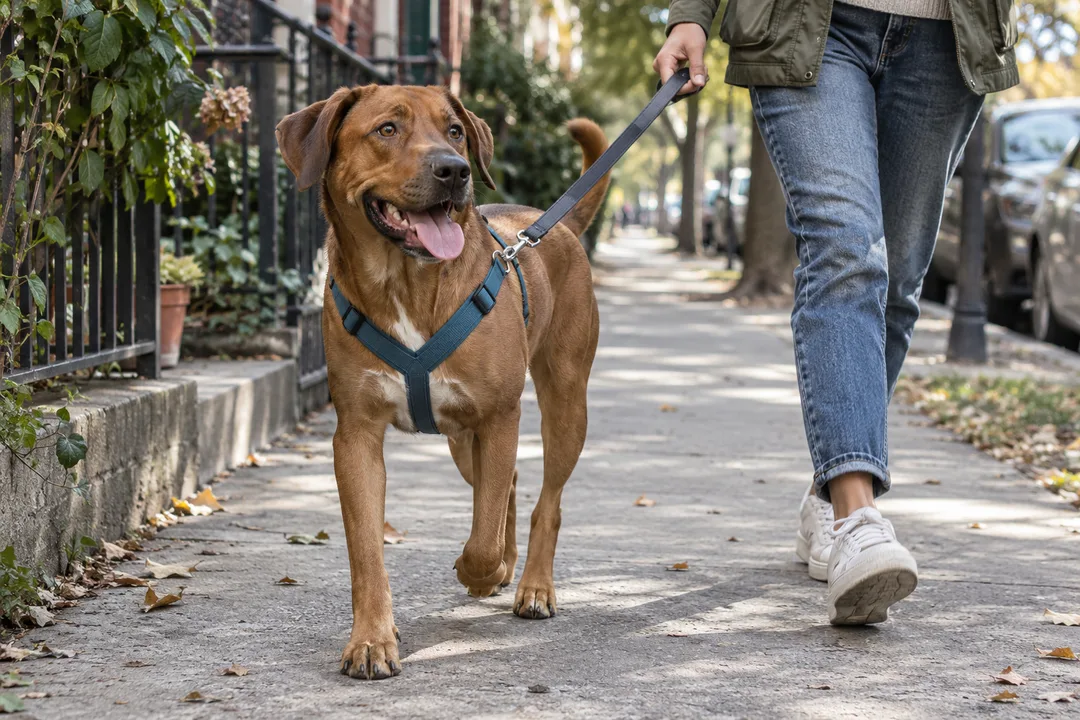
On a walk past a busy driveway, your dog stops to sniff and then backs away from the leash. A harness that looked tidy while the dog was still may shift when it moves. Have the dog stand naturally and measure around the widest part of the rib cage. Use the brand’s directions for where to position the tape. If the dog sits on the boundary between sizes, ask the manufacturer which measurement takes priority and shop where the item can be exchanged.
Compare the attachment points
A back attachment can suit a dog that already walks with a relaxed lead and a person who wants to clip in quickly. A front connection may help a handler redirect some dogs, but it can also make the walking setup less straightforward. Check how the lead lies when your dog turns, whether the strap twists, and whether any hardware sits against the leg or rubs behind it. For strong or sudden pulling, work on leash skills alongside equipment changes.
Do an indoor fit check
Adjust both sides before leaving home. Watch your dog take several natural strides, sit down and lower its head. Mark where a strap meets the buckle so you can tell if it slides out of position. If you use a winter layer, verify fit with the layer off and on, and reassess if your dog’s weight or coat changes. The Ruffwear example documents both chest and back attachment points and has model-specific fitting instructions.
What to pay for
Pay for the right adjustment range, buckles you can work and hardware in the position you use. A second clip is worth comparing for flexibility if the rest of the fit is already sound. Start with one harness you can exchange before adding a matching lead or jacket.
FAQ
What if my dog is between two sizes?
Use the maker’s guidance for that model or ask the seller to fit it. An exchange policy matters because equal chest measurements can sit differently on different dogs.
Is a back clip enough for a new harness?
It can suit a dog that walks comfortably on a relaxed lead. If you want a different attachment for training, compare how a front clip sits when the dog moves and turns.