
Reviews · Consumer Tech
GiiKER Super Slide Review: Is It Worth Buying?
Is GiiKER Super Slide worth buying for your child? See what ages 6+ can practice, who will enjoy it, the drawbacks and when to choose Rush Hour.
Dinner isn't ready, your child is bored, and the tablet is starting to look like the easiest answer. You'd like to offer something else—something they can settle into without you having to run the show.
For a child who likes puzzles, GiiKER Super Slide could fill that gap. It's a small sliding-block game with a simple goal: get the red square to the bottom of the board. Figuring out how to make room for it is where things get interesting.
Quick Verdict
A good fit for a puzzle-loving child age 6+ who enjoys figuring things out on their own. The built-in puzzles and optional help are the reasons to pay extra. If your child dislikes setting up pieces or wants a game to play against a sibling, we'd choose something else.
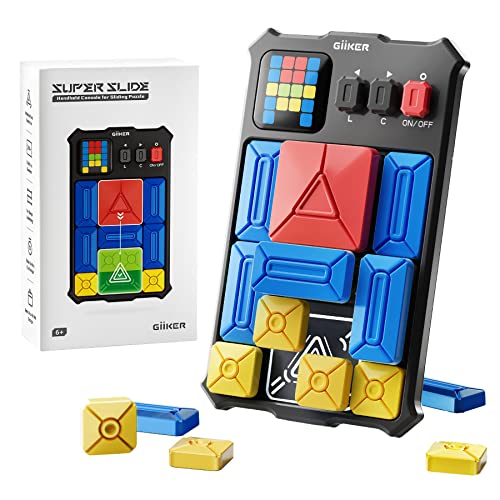
GiiKER Super Slide · Original black, one game · US · ASIN B09F67K7T6
Affiliate link · We may earn a commission. Affiliate Disclosure
Published
Last updated
Why buy it?
The best reason to buy Super Slide is that your child already enjoys a good puzzle. Maybe they linger over mazes or keep trying to fit one last piece into a crowded space. This gives them another problem to work on, with a fresh layout ready when they’re done.
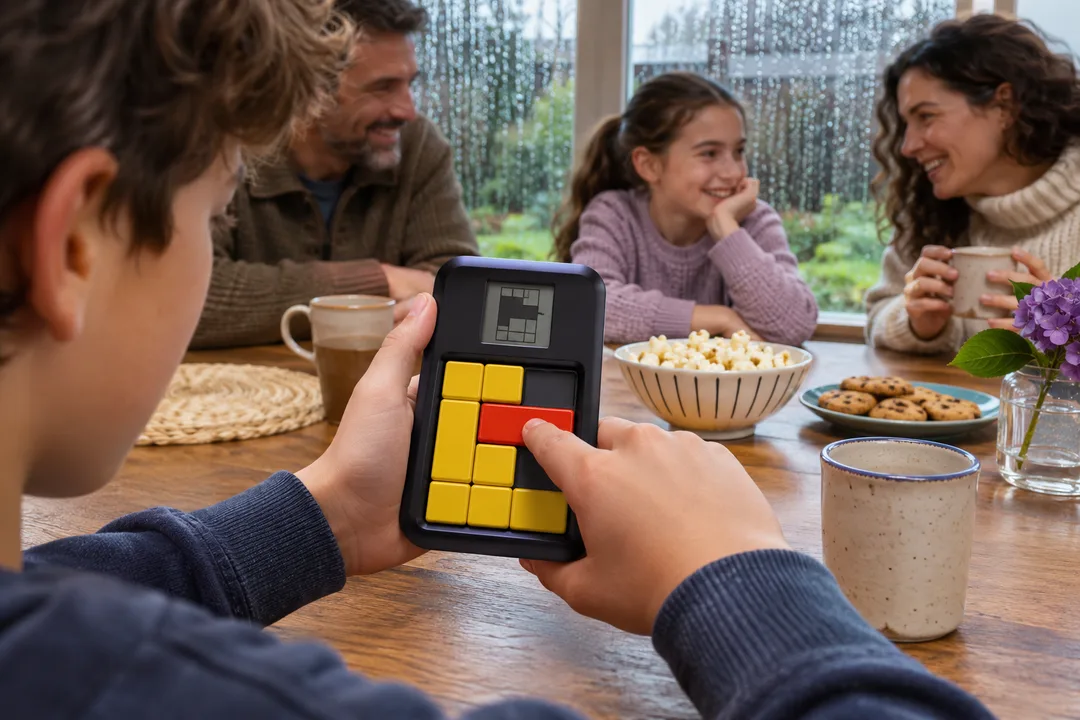
The little display shows where the blocks go. Your child copies that arrangement, then slides the pieces around to clear a path for the red square. They can’t just lift a block out of the way. They have to work with the space they’ve got.
You pay extra for the built-in library and electronic help. There’s no stack of challenge cards to carry, and Learn Mode offers a way forward when they’re stuck. For a child who enjoys solving alone, those are useful conveniences.
What kids get to figure out for themselves
“What needs to move first?”
Imagine the red square needs to move down, but another block is in the way. That block needs somewhere to go, too. Before your child can make the move they want, they have to create room for it.
That’s planning in a form they can see and touch. A useful move might even take a piece farther from the exit. The question becomes, “What will this let me do next?”
When the first idea doesn’t work
A few moves in, the path might still be blocked. Your child can slide pieces back, look at the empty space and try a different approach. Each attempt gives them something to go on.
There’s room here for problem solving and trial and error without an adult marking an answer right or wrong. If you’re sitting nearby, “Which piece is stopping you?” gives them more to work with than moving it for them.
Knowing when to help—and when to wait
It can be tempting to point out the answer when you can see it. But a little time to look, choose and reconsider is part of the appeal. Your child gets to own the solution.
Start with an easier puzzle and let them set the pace. If frustration takes over, try the help mode or put it aside for later. Working patiently through a puzzle doesn’t have to mean finishing it in one sitting, and the timer needn’t be the focus.
Who will enjoy it?
Your child’s interests tell you more than their age. A six-year-old who loves mazes may be more interested than an older sibling who would rather invent stories or build something from scratch.
GiiKER recommends ages six and up. Some children will still need help copying the starting layout or getting used to the rules. It makes sense as an independent activity once that setup feels comfortable.
We’d put it on the shortlist for a child who likes solo challenges and asks for another puzzle after finishing one. We’d pass if the main wish is to play with someone. Siblings can take turns or work together, but they won’t be competing on the same board.
The parts that might wear thin
Every puzzle starts with setup. The game shows a new layout; your child rearranges the blocks. If copying patterns already feels like a chore, the big puzzle library won’t solve that problem.
There are loose pieces to keep track of. Give the game a regular place to live. For travel, think about where your child will spread out and reset the board, especially if you’ll be packing up halfway through a puzzle.
You’ll need batteries. The original takes two AAs, sold separately—worth remembering if it’s a gift. It doesn’t need a phone for the built-in puzzles, but it does have a small LED screen.
It’s still the same kind of puzzle. The layouts change; the goal doesn’t. A child who wants variety in the activity itself may tire of it, even with hundreds of challenges left.
Would Rush Hour be a better buy?
Both games ask a child to make space by sliding physical pieces. Super Slide puts the layouts and help on the device. Rush Hour uses challenge cards and cars caught in a traffic jam, with no batteries to replace.
| GiiKER Super Slide | Rush Hour | Rush Hour Junior | |
|---|---|---|---|
| Recommended age | 6+ | 8+ | 5+ |
| Puzzles | 500+ built in | 40 cards | 40 cards |
| Help | Electronic Learn Mode | Included solutions | Included solutions |
| Batteries | Two AAs | None | None |
For a six- or seven-year-old trying this kind of game for the first time, take a look at Rush Hour Junior, too. Standard Rush Hour starts at eight according to ThinkFun’s guidance.
Choose Super Slide if your child already likes sliding puzzles and you’d value having layouts and help on the board. Choose Rush Hour if the car theme appeals and you’d prefer a game without electronics. Neither needs to be the “more educational” choice to be the right one for your family.
Our Super Slide vs. Rush Hour comparison goes into the differences in more detail.
Is it worth the money?
For a child who keeps coming back to puzzles, there’s a clear reason to consider it: plenty of layouts to work through, plus help that doesn’t always have to come from you.
For a first try at sliding puzzles, compare the price with Rush Hour Junior or standard Rush Hour. A simpler game can tell you whether your child likes the activity before you spend extra on the electronics.
We previously recorded $48.99 on November 13, 2026. That’s an older price, so check Amazon for today’s price and the selected version. Remember to add batteries to the gift bag.
Our take: buy it for a child who likes the challenge of figuring things out. The appeal is the chance to try a move, change their mind and finally see a way through. If that sounds like your child, the built-in puzzles make Super Slide a thoughtful option.
Which Super Slide is this?
This review covers the original black GiiKER Super Slide, model JKHRD001, Amazon US ASIN B09F67K7T6. Check that you’re ordering that version; Super Slide Pro and the other colors are separate options.
Before you wrap it
| What to know | Original Super Slide |
|---|---|
| Age guidance | 6+ |
| Puzzle library | 500+ challenges |
| Modes | Learn Mode and timed Challenge Mode |
| What to add | Two AA batteries, sold separately |
| Getting started | Copy the displayed layout, then slide the pieces |
| The goal | Move the large red square into the detection area at the bottom |
FAQ
Is GiiKER Super Slide worth buying for a six-year-old?
It is worth considering if your child enjoys physical puzzles and is willing to try again when stuck. GiiKER recommends ages 6+, but some children will need help copying the starting layouts. For a younger beginner who prefers a battery-free game, consider Rush Hour Junior, listed for ages 5+.
What can children practice while playing?
The puzzle asks a child to plan moves, make space, test an idea and revise it when the path stays blocked. They get to make their own decisions, see why a move does not work and try another approach.
Does Super Slide need a phone or batteries?
Built-in puzzles do not require a phone. The original model uses a small LED display and two AA batteries, sold separately. It is a physical puzzle with electronics, rather than a completely screen-free toy.
Is Super Slide a good travel puzzle?
It can work for travel if your child has a stable place to arrange the pieces and a way to keep them together. A table at your destination may be a better place for it than a bumpy car ride.
Which Super Slide version does this review cover?
One original black GiiKER Super Slide, model JKHRD001, Amazon US ASIN B09F67K7T6. Other colors and Super Slide Pro are outside this review. Check the selected option before ordering.
Can siblings play together?
They can take turns or discuss a solution, but this is a solo puzzle rather than a simultaneous two-player game. Choose something else if playing against each other is the main reason for buying.